



Behind Every Heartfelt Goodbye Post Lies a Harder, More Honest Story of Startups
You have seen the post. It appears in your LinkedIn feed, usually on a Tuesday, written in that particular tone that is simultaneously reflective and brave, personal and professional. The founder writes about the journey. They thank their team — always the team, always paragraph two. They say things like “the market wasn’t ready,” or “regulatory headwinds made it impossible to continue,” or, most classically, “we didn’t fail, we learned.” There is a carefully chosen photograph. The post gets 3,000 likes. Other founders comment “respect for the transparency.” And then startups are gone, and nobody talks about it again.
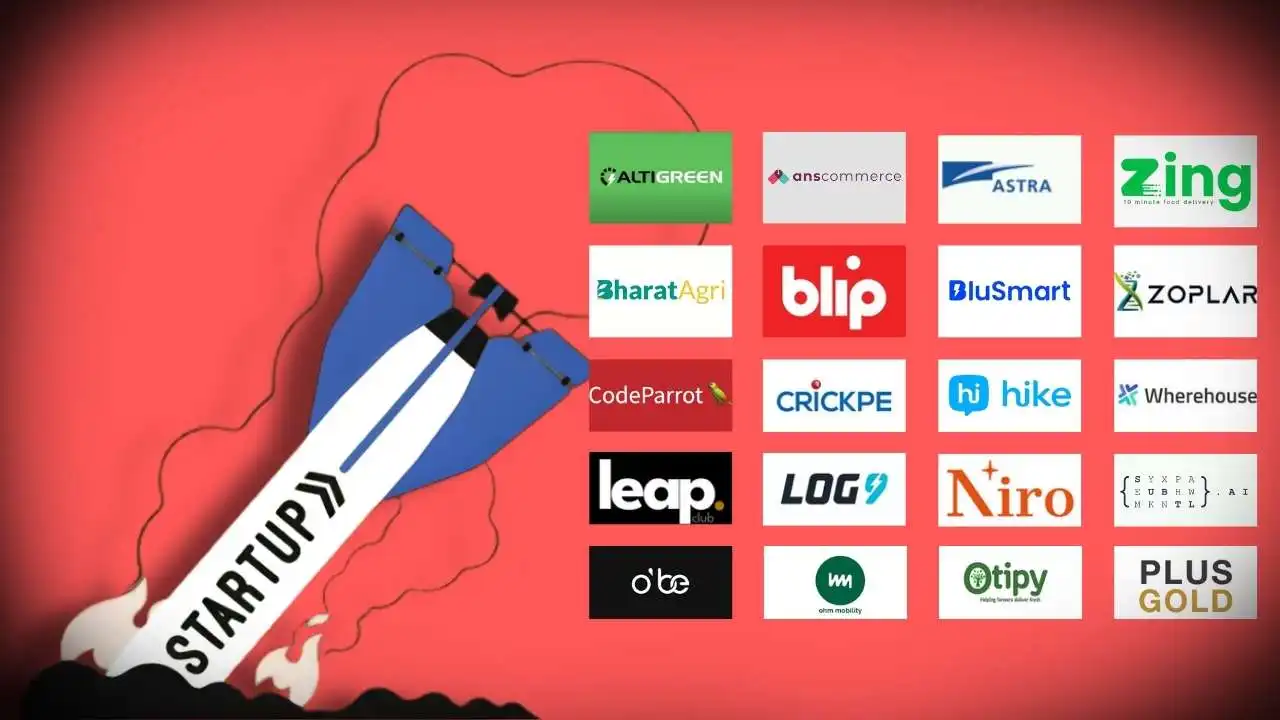
According to data compiled by Inc42, nearly 25 notable startups shut down their operations in 2025 — more than double the 12 startup shutdowns recorded the previous year. A broader dataset from market intelligence platform Tracxn puts the total at 729 startups that shut down in 2025. The LinkedIn posts explained all of it, of course. They always do. But if you have the patience to read past the gratitude and the growth-mindset vocabulary, a more complicated and more instructive story emerges — one that matters enormously if you are young, ambitious, and thinking about building something yourself.
What the Posts Said vs. What Actually Happening in Startups?
Let’s go through the cases one by one, not to be cruel to the founders involved — building something is genuinely hard, and shutting it down is genuinely painful — but because honest post-mortems are the only ones that teach you anything.
Zoplar, a medical equipment procurement startup backed by Blume Ventures, shut operations just a month after raising $3.4 million in funding in January 2025. The timing is almost surreal: the money had just arrived, and the doors were already closing. The reason was that the Central Drugs Standard Control Organisation ruled that imports of second-hand medical devices were not allowed — a regulatory decision that made Zoplar’s entire business model illegal overnight. The founders returned the money to investors. The LinkedIn post was gracious. But the actual lesson here is not about resilience or learning. It is about something far more fundamental: a startup had raised $5.1 million over three years and built relationships with 300 hospitals, and apparently nobody — not the founders, not the investors, not the advisors — had done a thorough enough read of the regulatory framework governing imports of refurbished medical equipment in India. That is not a market problem. That is a due diligence problem.
Hike, the messaging-turned-gaming startup founded by Kavin Bharti Mittal that had once been valued as a unicorn, shut down all global operations after the Indian government imposed restrictions on real-money gaming. The company had already made one dramatic pivot — abandoning its messaging product in 2021 to chase the gaming boom — and the second pivot’s runway ran directly into a regulatory wall.
Similarly, fantasy sports platform CrickPe, backed by Ashneer Grover, suspended operations as a 28% GST restructured the economics of online gaming entirely. The LinkedIn language in cases like these tends to reach for “external factors” and “macro headwinds.” What it rarely says plainly is this: we built a business whose survival depended entirely on a regulatory environment that we did not control and could not predict. That is a strategic choice, and it is worth naming it as such.
The Capital Crunch That Nobody Wants to Call By Its Name
Capital crunch played a significant role behind the discontinuation of almost all of the shutdowns in 2025. This is the Inc42 verdict, stated plainly, and it is the thing that most LinkedIn posts work hardest to avoid saying plainly. Running out of money is unglamorous. It implies that investors stopped believing in you, which feels personal, even when it is structural.
The structural story is this. Between 2021 and 2022, India was in the middle of startup euphoria — money was cheap, venture capitalists were aggressive, and startups raised at 100x revenue multiples. They burned through crores on ads, discounts, influencer campaigns, and rapid expansions. Unit economics didn’t matter; valuation did. By 2023 and 2024, the global funding winter had arrived, interest rates had risen, and startups with weak fundamentals couldn’t raise follow-on rounds.
The startups that shut down in 2025, in many cases, were not new victims of a new crisis. They were the delayed casualties of decisions made in 2021. Subtl, an early-stage startup, failed to raise any further capital after an initial angel investment of around ₹1.8 crore. Cofounder and CEO Vishnu Ramesh said that investor interest did not turn into committed funding, making it impossible to continue operations, despite having a workable product and some early clients. This is an honest assessment, and it is more useful than most. The product worked. The clients existed. The money stopped. That’s the real sentence.
The Governance Failures That Became the Elephant in the Room
Some of 2025’s shutdowns were not really about markets or regulation or funding at all. They were about governance — which is a polite word for “the people running this company made choices that they should not have made.”
BluSmart, once positioned as India’s answer to sustainable ride-hailing, shut operations in April after allegations of financial misconduct against its promoters surfaced. The company’s rapid expansion had been underwritten by large borrowings taken by its affiliate Gensol Engineering to finance an electric vehicle fleet. A subsequent investigation found that a portion of the funds had been diverted for personal use and to maintain credit ratings through fabricated documents. The LinkedIn posts around BluSmart’s collapse were considerably more tortured than most, for obvious reasons. But the lesson is one that the startup ecosystem has been learning, forgetting, and relearning for a decade: growth metrics cannot substitute for governance. A dashboard full of impressive numbers means nothing if the people at the top are treating investor money as a personal treasury.
The implosion of Good Glamm Group offered a different cautionary tale. Built on an aggressive acquisition strategy across beauty, personal care, and digital media, the pace and cost of acquisitions overwhelmed its balance sheet. By 2025, the group was selling brands at steep discounts, investors had exited the board, and employee and vendor payments were delayed. The LinkedIn vocabulary for this kind of failure tends to invoke “ambitious vision” and “challenging integration.” What it means, translated into plain language, is that the company bought things faster than it could understand them.
What This Means If You Are Thinking of Building Something
Here is the part of the article that most startup post-mortems skip, because it requires being direct about things that the ecosystem’s culture of positivity finds uncomfortable.
Investors are now far more cautious and metrics-driven. At the seed stage, conversations have shifted from “Can you grow fast?” to “Show me traction, retention, and product-market fit.” This is not a punishment. This is the ecosystem maturing into something that more closely resembles how durable businesses are actually built.
The next phase of Indian startups will likely be leaner, more disciplined, and globally competitive — moving from “Startup India” to “Sustainable India.” The sectors gaining ground reflect this shift: B2B SaaS with clear revenue streams, deep tech with defensible IP, logistics infrastructure built on ONDC. Less flash, more foundation.
The most honest thing that most of 2025’s shutdown LinkedIn posts could have said — but didn’t — is also the most useful thing for anyone reading this who is thinking about starting something: we ran out of money because we never had a credible path to making money, and we mistook fundraising for revenue. The two are not the same. One is a loan with equity attached. The other is proof that someone values what you built enough to pay for it with their own money, voluntarily, with no term sheet involved.
The founders who write “we didn’t fail, we learned” are not wrong. But learning requires naming what actually happened. The market being “not ready” is sometimes true. More often, it is a kindly phrased way of saying the product was not right, the timing was miscalculated, the capital was mismanaged, or the regulatory homework was not done. Those are harder things to say on a Tuesday afternoon on LinkedIn. They are also the only things worth saying.