

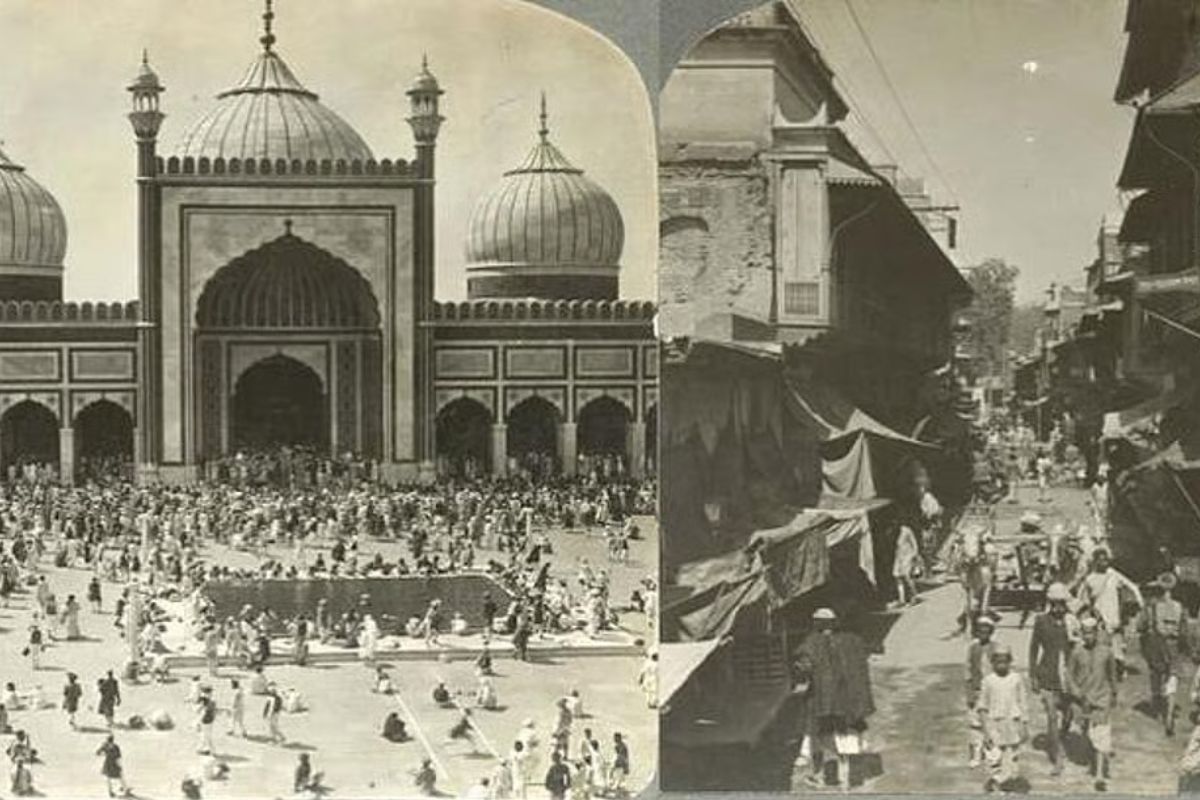



Let’s start with the problem in its full, unsparing clarity, because it deserves to be named before it gets solved. Delhi’s mercury is expected to hit 42°C to 43°C between April 22 and 24, marking the first heat wave of the 2026 season, and that is just April. Summer peaks in late May and early June, with average temperatures near 38°C, though heat waves can push highs close to 45°C.
And Delhi’s heat is not the heavy, damp heat of Mumbai or Chennai, which at least has the decency to feel consistent. Delhi’s proximity to the Thar Desert means hot, dry continental winds called loo blow across from the west, making days feel dramatically hotter than the thermometer suggests. You walk from your building to your car in approximately ninety seconds and you feel it in your bones.
Then you arrive at your office, where the facilities team has decided that the appropriate response to 43°C outside is 18°C inside, a temperature differential that would concern a meteorologist and certainly concerns your wardrobe. You are simultaneously dressing for a sauna and a refrigerator. You are dressing for two climates that happen to share a postcode and a calendar page. And then, because this is Delhi and the city has a social life to match its professional density, you are also dressing for the rooftop at 8 p.m., when the temperature has dropped to a merely punishing 35°C and someone has put fairy lights on a terrace and called it a party.
This is the problem. Here is how to solve it — and here is why Delhi, more than any other Indian city, has already done most of the solving for you.
The Fabric Conversation You Have Been Having Wrong
The first thing most people reach for when they think “Delhi summer” is linen. This is a reasonable instinct and an incomplete answer, and understanding why the answer is incomplete is the foundation of everything else in this piece.
Linen is, structurally speaking, one of the most breathable fabrics in existence. It has a loose weave that allows maximum airflow, is naturally antimicrobial, and gets softer with every wash. For the outdoor, rooftop, lunchtime-in-the-sun portion of your Delhi day, it is nearly unbeatable. The hollow fibre structure of flax — from which linen is derived — absorbs moisture and releases it rapidly, meaning that in Delhi’s characteristically dry summer heat, linen performs its cooling function exactly as advertised.
The problem arrives the moment you step into a meeting room at 18°C. Linen has a relatively low insulating capacity — the same weave openness that keeps you cool outside offers very little barrier against aggressive air conditioning. You go from perspiring to shivering in the span of an elevator ride. And then there is the wrinkle question: linen wrinkles a great deal, which is charming in the right context — a weekend breakfast, a gallery opening — and considerably less charming in a client presentation or an interview. The fabric is telling you to relax. Your nine o’clock meeting is not interested.
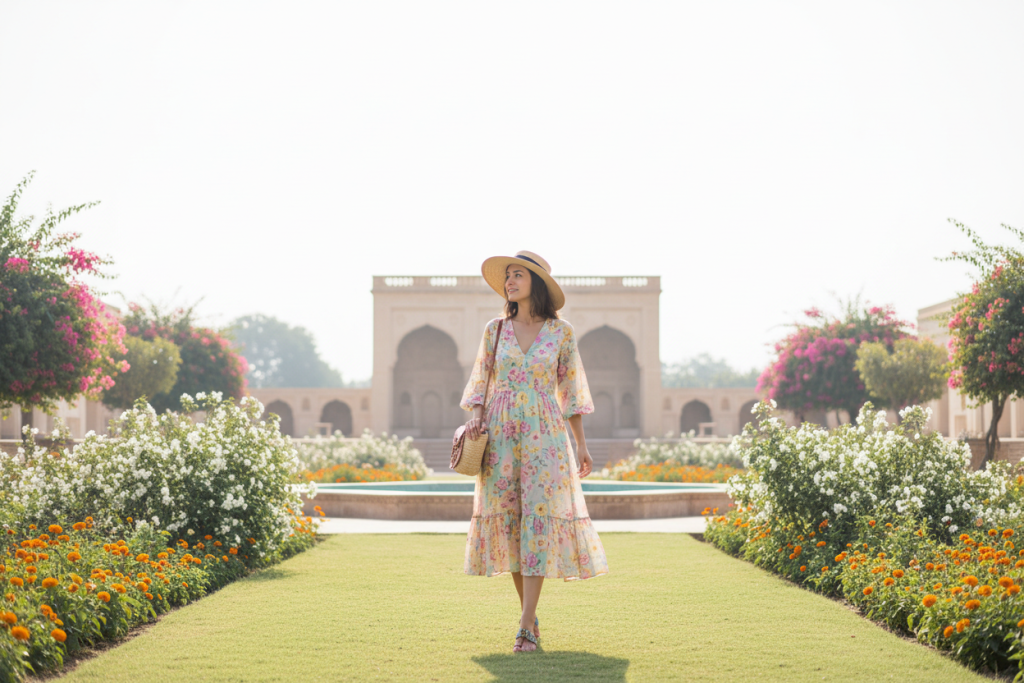
The fabric that quietly solves both sides of this equation — and that Delhi’s working wardrobe has adopted with considerably more enthusiasm than the fashion press has credited — is viscose. Viscose kurta sets are ideal for those in-between occasions when you need to look polished but comfortable — they travel well, don’t wrinkle as much as linen, and maintain their shape throughout the day.
Viscose is a semi-synthetic fibre derived from natural cellulose — wood pulp, most commonly — and its molecular structure is engineered to produce exactly the qualities that the Delhi office-to-rooftop transit demands: drape that reads as intentional and elegant, a surface that absorbs moisture without clinging, and a weight light enough to feel comfortable in outdoor heat without being so thin that it provides zero warmth against an air conditioning unit working at full hostility.
Linen-viscose blends are increasingly popular precisely because they reduce wrinkling while maintaining breathability — you get the structural airflow of linen and the crease-resistance and drape of viscose in a single fabric. This is the textile equivalent of having your cake in a meeting and eating it on the terrace, and if you find this blend in a well-cut silhouette, you have solved approximately seventy percent of the Delhi summer dressing problem.
The third fabric worth knowing — and the most exciting textile story in sustainable fashion right now — is TENCEL Lyocell, produced by Austrian company Lenzing. TENCEL is smooth and cool to the touch, has excellent moisture-wicking properties, is highly breathable, produced using a closed-loop eco-friendly process, and is gentle on sensitive skin. It has the surface quality of silk, the cooling performance of linen, and the wrinkle behaviour of nothing you have ever worn in summer — it falls, it recovers, it moves. The price point is higher, but for anyone spending long days moving between climates, it justifies itself by the second Tuesday.
What the AC Is Actually Doing to Your Outfit
Understanding the thermal physics of this problem helps you make better decisions at the shop, so bear with a brief detour into the science of warmth and fabric.
An air-conditioned room does not just lower the temperature — it strips humidity from the air, which is actually the mechanism by which it makes you feel cold. Dry air draws moisture away from your skin rapidly, and this is what produces the specific, particular freeze of a heavily air-conditioned Indian office in summer. This is why certain fabrics that feel perfectly comfortable outside — where the air is dry but warm — feel dramatically colder inside, where the air is dry and cold. Fabrics with high surface contact area (tight weaves, dense knits) trap the little warmth your body is producing. Fabrics with very open weaves allow that warmth to escape immediately.
The practical implication for your wardrobe is that layering is not optional — it is structural. The person who has solved Delhi summer dressing is not the person who has found the magic single garment. It is the person who has found the magic base garment and the magic second layer that can arrive and depart without transforming the entire outfit’s register. A structured blazer in breathable cotton or a light linen jacket works as the office layer and then comes off for the evening. A long linen shirt over a sleeveless viscose set is a different proposition depending entirely on whether it is buttoned or hanging open. The variable is the layer; the constant is the foundation.
The Formulas That Actually Work
For women navigating this terrain, the highest-performing outfit formula in the Delhi working wardrobe right now is the wide-leg trouser with a structured top in a linen-cotton or linen-viscose blend. Wide-leg trousers in breathable fabrics move air around the legs continuously — functioning, in effect, as a passive ventilation system — while a structured top in a slightly denser fabric provides the insulation layer against AC.
The key is the trouser fabric: it must be light enough to drape without clinging when you are sweating in a parking lot, and structured enough to look intentional when you are sitting across a table from someone important. A natural or earthy palette — the whole gamut from raw white through sand to terracotta — reads as professional without absorbing heat the way dark colours do.
The second formula is the co-ord set in a printed viscose or modal, which earns its place because it answers the “does this look intentional” question before you even have to ask it. A matching set in a loose, flowing fabric reads as dressed up regardless of how relaxed the individual pieces are. The print becomes the effort. The fabric does the climate work. For the rooftop later, you remove the blazer or jacket that was doing AC duty, keep the co-ord, add a pair of earrings that could theoretically survive an archaeological site, and you are ready.
For men, the formula has been waiting for them in their own wardrobes all along, largely unclaimed: the unstructured half-sleeve shirt in linen-viscose blend with straight-cut trousers in the same tonal family. Not a formal shirt — the structured collar and the tuck produce too much heat retention.
An unstructured shirt with a spread or mandarin collar in a fabric that allows air movement, paired with trousers that are not so slim as to grip the leg in heat. The fit is the variable that most men get wrong: in summer, the silhouette should have deliberate ease built in, not because loose clothing is inherently casual, but because ease in a well-cut garment allows air circulation that changes your entire experience of the day.
Where Delhi Is Actually Solving This
Delhi’s advantage in this specific problem is structural and historical. The city has always had to dress for extreme heat — Delhi’s climate is greatly influenced by its proximity to the Himalayas and the Thar Desert, causing it to experience both weather extremes — and its textile economy, centred on everything from Chandni Chowk’s wholesale markets to Hauz Khas’s designer studios, has been producing practical clothing for this climate for generations. What has changed recently is that the designer tier has caught up with what the tailored-to-order tier always knew: that the most sophisticated garment for Delhi summer is not the most elaborate one, but the most functionally intelligent one.
Ruchika Sachdeva’s label Bodice, which began as a tiny studio space near Hauz Khas Village, embodies a vision for the modern Indian wardrobe through structured tops, skirts, trousers, and dresses with trim waistlines and sharp silhouettes in cotton, linen, and wool designed to work all year round. Sachdeva’s design philosophy — clean structure, natural fibres, a silhouette that does not require ironing to look intentional — is almost perfectly calibrated to the AC-to-rooftop problem, and her pieces are worth every rupee of the investment because they amortise across seasons and contexts rather than belonging to one.
For those willing to explore slightly more experimental territory, the label ecosystem that has grown up around Delhi’s Dhan Mill Compound and the Mehrauli design district represents some of the most intelligent casual-professional dressing being produced in India right now. Pernia’s Pop-Up Shop in Mehrauli aggregates designers including Seema Gujral and Papa Don’t Preach by Shubhika, where summer collections regularly feature exactly the kind of easy, breathable separates that answer the dual-climate question. The price point here sits above fast fashion and below full designer, which is precisely where functional summer dressing belongs.
For fabric-first shopping — buying the cloth and taking it to a tailor, which remains one of Delhi’s most powerful fashion assets — Chandni Chowk houses three textile markets including Cloth Market, Kinari Bazaar, and Katra Neel, offering everything from chanderi and net to silk and printed cotton fabrics, while Shankar Market near Connaught Place has been supplying Delhi’s tailor ecosystem with quality cloth since long before any of this was called “fashion.” A linen-viscose blend in a neutral or earthy tone, custom-cut to your measurements by one of the market’s skilled tailors, will perform better than most ready-to-wear at twice the price and reward the body you actually have rather than the standard-size body that ready-to-wear imagines.
The Specific Decisions That Change Everything
Colour: choose on the light side of your palette. Not necessarily white — which is impractical in a city that produces dust as a civic service — but the natural family: raw ecru, warm ivory, pale sage, dusty mauve, sand. Light colours reflect radiant heat rather than absorbing it, which translates to a measurable difference in outdoor comfort. Inside the office, they read as clean and intentional. On the rooftop at dusk, they catch the light in a way that darker colours simply cannot.
Silhouette: build in ease. Not volume for its own sake, not the billowing excess that becomes its own liability in Delhi’s periodic loo winds, but a considered looseness at the key ventilation points — underarm, knee, collar — that allows air to circulate as you move. The difference between a slightly relaxed silhouette and a fitted one, in a Delhi July, is approximately fifteen minutes of comfort before you start looking for shade.
The layer: invest in one extraordinary second piece — a light linen blazer in a textural weave, a structured cotton jacket with interesting detailing, a silk-cotton blend kurta that reads as outerwear but weighs almost nothing — and treat it as the hinge of your entire summer wardrobe. It is the thing that makes you appropriate for the meeting and distinctive on the terrace. It is the answer to the air conditioning problem and the formality problem simultaneously.
Delhi figured this out a long time ago, in its tailoring markets and its fabric lanes and its stubbornly practical attitude toward getting dressed in a city that does not make dressing easy. The rest of the country is just beginning to catch up.
The IMD has issued a yellow alert for Delhi heat wave conditions from April 22 onwards. Dress accordingly, and dress well.