



Listen up besties, if you’re still recovering from Valentine’s Day and thinking about where all those couple photos should have been taken, we’ve got news for you. March 2026 is literally serving the most perfect weather India has seen all year, and Gen Z is not staying home for this. According to literally every travel expert and Google Trends data dropping right now, our generation is out here rewriting the entire travel playbook, and spring 2026 is about to be iconic for all the right reasons.
Gone are the days when Indian travel meant the same tired checklist of Taj Mahal selfies, Mall Road shopping in Manali, and Goa party circuits. We’re done with that energy. In 2026, travel industry leaders are confirming what we’ve known all along: Gen Z wants experiences that actually mean something, destinations that haven’t been destroyed by overtourism, and trips that give us stories worth telling instead of just Instagram posts that look like everyone else’s.
So if you’re sitting there wondering where to escape to this March as the weather turns from “why is it still cold” to “okay this is actually perfect,” we’ve compiled the destinations that are literally trending right now, backed by actual data and industry insights that prove these spots are about to be everywhere on your feed.
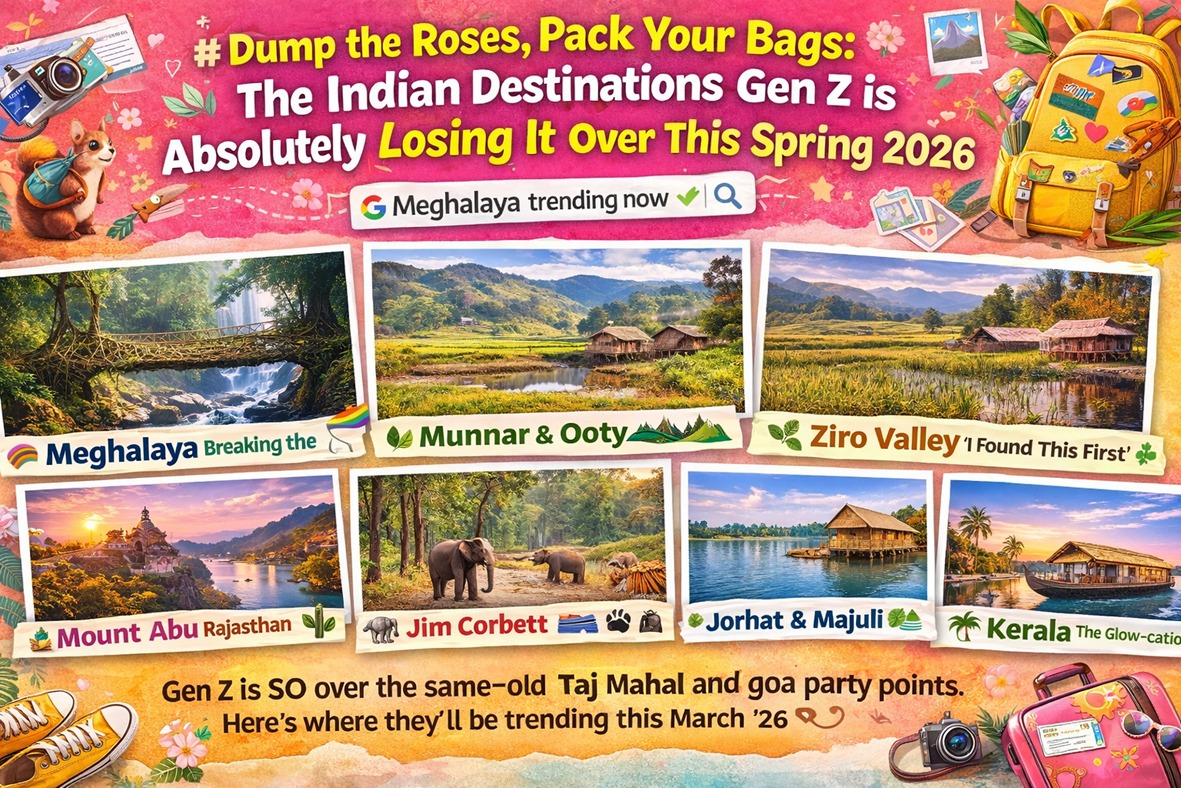
Meghalaya: The Destination That’s Breaking the Internet Right Now
Real talk: if you haven’t heard about Meghalaya yet, you’re about to. This northeastern gem has been named the top destination for Gen Z travelers in 2026 by multiple travel industry leaders, and it’s not hard to see why. Thomas Cook’s President Rajeev Kale literally said that young India is showing “strong and growing interest in exploring India through immersive, experience-led journeys that blend nature, wildlife and distinctive local settings,” and Meghalaya checks every single one of those boxes.
March is peak perfection time to visit Meghalaya. The monsoons that make this the wettest place on Earth are still months away, which means you get all the jaw-dropping waterfalls, living root bridges that look like they’re from a fantasy movie, and crystal-clear rivers without dealing with torrential rain that makes trekking impossible. The state’s capital Shillong is giving major hill station vibes but with way better food and music scene than the typical tourist spots.
What makes Meghalaya the ultimate Gen Z destination is that it refuses to follow any tourist script. There’s no fixed itinerary everyone follows. You can spend your days exploring caves in Cherrapunji that go on forever, walking across those insane living root bridges in Mawlynnong (which is literally Asia’s cleanest village and yes, that’s a flex), kayaking in crystal blue waters, or just vibing with local Khasi communities who are keeping their traditions alive while being super welcoming to travelers.
The best part? Meghalaya captures what travel industry experts are calling the defining characteristic of Gen Z travel in 2026: it’s a place “where itineraries don’t matter, perfect for travelers who want to disconnect, explore at their own pace and come back with stories and experiences that feel truly their own.” That’s the energy we’re bringing into spring.
Munnar and Ooty: Hill Stations That Actually Hit Different in March
If someone tells you hill stations are boring, they clearly haven’t been to Munnar or Ooty in March. These South Indian destinations are having a major moment right now because March is when they transform from regular beautiful to absolutely unreal. Munnar in March feels like someone turned the saturation up on nature itself. The tea gardens are so green they don’t look real, the air is perfectly crisp, and you can actually walk around all day without melting or freezing.
What’s trending in Munnar right now is slow travel. Instead of trying to cram fifteen viewpoints into one day like you’re speedrunning a video game, Gen Z travelers are staying in homestays run by local families, learning about tea processing from people who’ve been doing it for generations, taking early morning walks through plantations when the mist is still hanging low, and basically just existing in a space that feels completely different from the chaos of city life.
Ooty is giving similar energy but with bonus colonial architecture that creates this weird time-capsule vibe. The botanical gardens are in full bloom in March, the Nilgiri Mountain Railway is running smoothly with views that will have you taking way too many phone photos, and the weather is ideal for boat rides on Ooty Lake that don’t involve either shivering or sweating. Plus, the local food scene has gotten seriously good with cafes that understand Gen Z’s need for good coffee and decent WiFi even when we’re trying to disconnect.
Ziro Valley: The Ultimate “I Found This First” Flex
Located in Arunachal Pradesh, Ziro Valley is for people who want to tell stories that start with “so you probably haven’t heard of this place.” In March, when the weather is clear and the rice fields are glowing that specific shade of green that photographs cannot capture accurately, Ziro becomes what travel experts are calling “raw, green and rooted deeply in culture.”
The Apatani tribe that lives here has preserved their traditions and sustainable lifestyle in ways that will make you question everything about modern living. Their bamboo houses, their agricultural practices, their festivals, their entire way of life exists at a pace that feels completely alien to anyone who’s spent their life scrolling. That disconnect is exactly what makes it powerful.
March timing is crucial for Ziro because it’s after winter cold but before monsoon rains, which means you can actually explore properly. The Ziro Music Festival might not happen in March, but honestly, visiting when it’s not festival season means you get to experience the valley as it actually is rather than as a temporary music venue. You can spend days just walking through villages, learning about tribal culture from people who are genuinely interested in sharing rather than performing, and realizing that the concept of “tourist attractions” is kind of limiting when the entire place is the attraction.
Mount Abu: Rajasthan’s Cool Secret That March Perfects
Most people think of Rajasthan and immediately imagine scorching heat and sand everywhere. Mount Abu said “not me though” and became the state’s only hill station sitting pretty in the Aravalli range. March is when Mount Abu really shines because the weather is ideal for all the activities that make this place special. Days are warm enough for boating on Nakki Lake, cool enough for hiking up to sunset viewpoints, and perfect for exploring the Dilwara Jain Temples that have carvings so detailed they’ll make you wonder how humans even made them.
What’s trending about Mount Abu in spring 2026 is its role as the desert state’s unexpected nature escape. When people think they’re going to see forts and palaces in Rajasthan, Mount Abu shows up like a plot twist with actual forests, lakes, and weather that doesn’t require carrying your own body weight in water bottles. The spring festivals happening in March add extra color and energy to the town, making it feel particularly welcoming.
The vibe here is different from typical tourist Rajasthan. It’s way more chill, with locals who aren’t trying to hustle you into buying something every five seconds, and travelers who came looking for something other than the standard Jaipur-Jodhpur-Udaipur circuit. That alternative energy is exactly what Gen Z is seeking in 2026.
Jim Corbett: Wildlife That Actually Respects Your Time
Here’s the thing about wildlife tourism: it usually involves waking up at hours that should be illegal, sitting in uncomfortable vehicles for way too long, and maybe seeing some animals if you’re lucky. Jim Corbett National Park in March changes that equation. The weather is fresh and green after winter, rivers are flowing gently through forests, wildlife sightings are genuinely rewarding because animals are more active, and the whole experience feels less like suffering for potential Instagram content and more like actual connection with nature.
March’s cooler mornings make safari timings way more bearable, and the visibility is excellent because the vegetation isn’t yet the thick jungle mess that summer brings. You’ve got solid chances of spotting tigers, elephants, deer, and hundreds of bird species that birding enthusiasts lose their minds over. Even if you’re not specifically a wildlife person, just being in a space where nature is clearly in charge and humans are just visitors hits different than regular travel.
The accommodations around Corbett have also upgraded their game significantly, with properties that understand Gen Z wants comfortable stays with good WiFi for uploading those animal photos, sustainable practices that don’t make you feel guilty about your carbon footprint, and social spaces where you can meet other travelers who also think 5 AM safari calls are intense but worth it.
Jorhat and Majuli: The Northeast Combo Breaking Search Records
Google Trends data shows one of the sharpest rises in destination searches for Jorhat and Majuli in Assam, making them genuine bellwethers for offbeat Northeast India trips in 2026. Jorhat acts as your gateway to Majuli, which is the world’s largest river island and home to cultural experiences that feel completely removed from anything you’ll find elsewhere in India.
March falls perfectly in the November to March ideal visiting window when ferry services to Majuli run smoothly and the island remains stable for extended walking circuits. This timing matters because Majuli’s cultural heritage includes mask-making traditions, Vaishnavite monasteries called satras, and agricultural practices that have sustained communities for centuries. In March, the weather is calm with clear visibility, making it perfect for heritage walks and genuine interactions with local artists who are keeping these traditions alive.
What makes Jorhat-Majuli special for Gen Z is the tea tourism angle combined with indigenous culture. Jorhat is surrounded by tea estates where you can actually learn about tea production from seed to cup, stay in heritage bungalows that British planters built back in the day, and taste teas that never make it to regular stores because they’re produced in such small quantities. Then you take a ferry to Majuli and suddenly you’re in a completely different world where river island life moves at its own pace and modern tourism infrastructure barely exists.
This combination of accessible luxury (tea estate stays) with raw cultural immersion (Majuli’s village life) creates the kind of trip that gives you stories for years. Industry experts are calling this region a strategic choice for travelers who want cultural depth and infrastructure-linked convenience without dealing with overtourism that’s destroyed more famous destinations.
Kerala: Glow-cations Are the Move for March 2026
Kerala has always been beautiful, but in 2026 it’s specifically trending for what the industry is calling “glow-cations” focused on skin health, longevity, hydration, and climate-based wellness rather than generic spa holidays. March weather in Kerala is ideal for Ayurveda treatments that actually work because you’re not fighting humidity or heat that makes you sweat off expensive oils five minutes after application.
The backwaters are obviously stunning, but what Gen Z is discovering is Kerala’s wellness infrastructure that goes way deeper than tourist massage parlors. We’re talking about authentic Ayurveda centers where treatments are prescribed based on your actual dosha rather than just whatever the menu offers, yoga retreats that teach you practices you’ll actually use back home rather than just making you take awkward photos, and eco-resorts that understand sustainability isn’t just a marketing buzzword but an actual operating philosophy.
March is also when Kerala’s festivals bring extra cultural richness to your trip. The food scene here deserves its own article because Kerala cuisine is severely underrated in national conversations despite being absolutely incredible. From proper fish curry that changes your understanding of what curry can be, to appam and stew combinations that become comfort food even if you didn’t grow up eating them, Kerala’s food will have you planning your next trip before this one ends.
Why March 2026 is Actually the Perfect Time
Let’s get into why March specifically is the move for these destinations. Travel experts are literally calling March “the kind of month when you can pack light, walk more, linger longer, and truly enjoy being outdoors.” Winter has released its grip but summer hasn’t shown up yet to ruin everything. The country feels open, alive, and ready to be explored in ways that other months don’t quite achieve.
For Gen Z specifically, March 2026 comes with some interesting factors that make travel more accessible than before. Long weekend opportunities are scattered throughout the month, newer airports like Jewar International and Navi Mumbai International are reshaping domestic connectivity, and travel companies have figured out that our generation wants personalized experiences rather than rigid package tours that treat everyone identically.
The bigger shift happening in 2026 is that Gen Z is redefining what Indian travel even means. According to recent research, eighty-seven percent of Gen Z travelers in India find booking trips overwhelming compared to just fifty-two percent globally across all age groups. But despite that stress, sixty-five percent of us globally claim that seeing the world is the best way to spend money. That conviction is driving us toward destinations that prioritize experience over expense, authenticity over Instagrammability, and stories over stamps in passports.
Environmental consciousness is also shaping our choices. Fifty-six percent of Gen Z globally would rather support environmentally responsible companies even if it costs more, and the same percentage actively seek eco-friendly accommodation. That’s why destinations like Meghalaya with its community-based tourism, Kerala with its eco-resorts, and Majuli with its sustainable traditional practices are resonating so strongly with us in 2026.
The Bottom Line for Your Spring Break
If you’re still sitting on those Valentine’s roses feeling like you should have spent that money on flights instead, here’s your sign. March 2026 is serving ideal weather, trending destinations that aren’t completely overrun yet, and a cultural moment where our generation’s travel priorities are actually being taken seriously by the industry.
Whether you choose Meghalaya’s misty adventures, Munnar’s tea-scented serenity, Ziro’s cultural immersion, Mount Abu’s surprising coolness, Corbett’s wildlife authenticity, Majuli’s river island magic, or Kerala’s wellness focus, you’re participating in a larger shift toward travel that means something beyond just checking boxes on a bucket list.
Pack light because March weather is forgiving, bring curiosity because these destinations reward it, charge your power banks because you’ll be taking photos of things you’ve genuinely never seen before, and get ready for a spring that your feed will remember. The destinations Gen Z is choosing in 2026 aren’t just trending because algorithms said so. They’re trending because they represent what we actually want from travel: real experiences, genuine connections, environmental responsibility, cultural depth, and stories that are ours rather than carbon copies of everyone else’s.
March 2026 belongs to travelers who want more than the usual script. These destinations are waiting, the weather is perfect, and spring is not getting any more ideal than this. Time to turn those post-Valentine’s feelings into pre-summer adventures that actually matter.