



You have two choices this weekend. You can stay in Delhi, watch the temperature gauge hit 43°C by noon, feel the hot wind off the flyover hit you like a hair dryer set to “hostile,” and spend Saturday afternoon arguing with the AC remote. Or you can get on a train or pack a bag into a hatchback for trips and be somewhere genuinely different by evening. This article is about the second option — not a vague list of “hill stations near Delhi,” but a properly curated set of escapes, organised by how much time you have, what you’re willing to spend, and how much of a crowd you can tolerate.
How These Were Chosen as Trips?
Before the recommendations, the criteria — because a list without reasoning is just noise.
Every destination here is reachable from Delhi in under six hours, either by road or rail. That’s a hard ceiling. Anything beyond six hours stops being a weekend trip and starts being a logistics problem. Each place either sits at an elevation that genuinely drops the temperature by at least 8–12°C compared to Delhi in late April, or it offers something compelling enough (a river, a forest, a vibe) to justify the heat.
Budget options exist at every destination — not hostel-dorm-only situations, but real beds in places that don’t require you to book three months in advance. And finally, each place has been assessed for late April specifically, because the hills in April are different from the hills in July. Certain routes are clear, certain treks are dry and accessible, and the tourist hordes that descend post-May holidays haven’t arrived yet. Late April is, quietly, one of the best windows to do this.
Tier 1 — The 24-Hour Dash (Within 4 Hours)
These are for when you decide on a Friday evening that you need out. Pack light, drive or take an early train, be back Sunday night.
Rishikesh — Water, Mountains, and a Reliable Reset
Rishikesh sits roughly 240 kilometres from Delhi, which translates to about five to six hours by road (accounting for the Haridwar stretch on NH58) or five and a half hours on the Jan Shatabdi Express from Delhi. At an elevation of around 372 metres, it’s not dramatically cooler than Delhi in late April — temperatures hover around 30–35°C during the day — but that misses the point of Rishikesh.
The Ganges here is ice-cold, glacial melt running fast and green, and spending two hours by the river at Shivpuri or doing a rafting stretch between Brahmpuri and Rishikesh beach resets something that a fan at home cannot. The town has enough good cheap food (the German Bakery near Laxman Jhula, Chotiwala near Ram Jhula for the classic thali) and enough budget stays in the ₹800–1,500 range on the Tapovan side to make a 24-hour turnaround genuinely satisfying. The vibe is reliably chaotic and calming in the same breath. Leave Delhi by 5 AM to hit Rishikesh by 10, beat the afternoon heat by being in the water.
Mussoorie — The Hill Town That Still Earns Its Reputation
At 2,005 metres, Mussoorie brings April temperatures down to a very comfortable 15–22°C. It’s 290 kilometres from Delhi via Dehradun — roughly a five to six hour drive on NH58 depending on where you’re starting — or you take a train to Dehradun (the Jan Shatabdi or Dehradun Shatabdi, both around five to six hours) and then a 30-kilometre taxi ride up to the Mall Road area. Yes, Mussoorie is touristy.
The Mall Road gets crowded. The cable car to Gun Hill has a queue. But Mussoorie’s charm is resilient — walk fifteen minutes off the main drag toward Landour, the quieter cantonment area above the town, and the crowd disappears entirely. Landour has colonial-era bungalows, old bakeries (Char Dukan is the famous cluster of four shops near the top), and pinewood views that make you forget it’s nearly May. Budget stays cluster around Library Chowk; mid-range guesthouses near Cloud’s End are worth the extra ₹500 per night for the valley views.
Lansdowne — The Underrated One
If Mussoorie sounds like too many selfie sticks, Lansdowne is the answer. It sits at about 1,706 metres in Pauri Garhwal district, roughly 260 kilometres from Delhi — about five hours on the Kotdwar route via NH9 and then the hills. There’s no train that goes directly to Lansdowne; the nearest railhead is Kotdwar, which is then a 40-kilometre drive up. What you get in exchange for the slight inconvenience is a town that is genuinely quiet. Lansdowne is a Garhwal Rifles regimental headquarters, which gives it an unusually neat and unhurried character for a Uttarakhand hill town.
The Bhim Pakora walk, the Tarkeshwar Mahadev temple trek through oak and rhododendron forest, and the Tip-N-Top viewpoint are all unhurried, uncrowded, and genuinely lovely in late April when the rhododendrons are finishing their bloom. Budget accommodation is available at GMVN’s tourist rest house and a handful of small guesthouses. Expect to pay ₹1,000–1,800 for a clean double room.
Tier 2 — The Proper Weekend (4–6 Hours)
These are for when you leave Friday night or very early Saturday and return late Sunday — the full weekend, used correctly.
Kasauli, Himachal Pradesh — Colonial Quiet and Cool Air
Kasauli is 305 kilometres from Delhi, sitting at an elevation of 1,800 metres in the Solan district of Himachal Pradesh. Drive time is roughly six hours via NH44 and then the Kalka–Kasauli road. The Shatabdi Express to Kalka (around four hours from New Delhi station) followed by a taxi is a clean, relaxed way to arrive. In late April, temperatures in Kasauli are 12–20°C — that is genuinely cool, the kind of weather where you want a jacket in the evening.
The town is tiny, walkable, and full of old colonial-era bungalows converted into homestays and boutique hotels. The main draw is the Kasauli Club (outsiders can get day passes), the Christ Church, and the forested Monkey Point walk with its sweeping views of Chandigarh and the plains below. There are no malls, no theme parks, no organised attractions — which is precisely its appeal. Decent budget stays run ₹1,500–2,500 per night. The Kasauli Brewery, one of the oldest in Asia (established 1820), is nearby at Solan and can be visited with prior arrangement.
Chopta, Uttarakhand — For Those Who Actually Want to Walk
Chopta is called the “Mini Switzerland of Uttarakhand,” which is marketing-speak, but the underlying reality is solid: at 2,680 metres, in the middle of the Kedarnath Wildlife Sanctuary, it is genuinely stunning and genuinely cold (8–15°C in late April). The drive from Delhi is approximately 450 kilometres — about eight hours on a normal day — which pushes the edge of “six hours,” but overnight bus services from ISBT Kashmere Gate to Ukhimath (the nearest large town) get you within 14 kilometres of Chopta and make the logistics workable.
The Tungnath–Chandrashila trek from Chopta is one of the best short treks in Uttarakhand: Tungnath temple (3,680 metres, the highest Shiva temple in the world) and Chandrashila peak (4,000 metres) are reachable as a day hike. In late April, the snow has largely cleared from the lower sections of the trail, rhododendrons are in peak bloom, and the crowds of summer haven’t hit. Accommodation is simple — forest campsites and small dhabas with basic rooms — and budget stays run ₹600–1,200 per night. Carry a sleeping bag.
Nainital — The Classic That Keeps Delivering
Nainital is a six-to-seven-hour drive from Delhi (300 kilometres via NH9 through Moradabad and Kaladungi) or a six-hour journey on the Ranikhet Express to Kathgodam, followed by a 35-kilometre taxi ride up. At 2,084 metres, April temperatures sit at 10–20°C — the Naini Lake at this time of year is calm, the rhododendrons in the surrounding Nainital forest are finishing their season, and the May–June tourist crush hasn’t arrived.
The Naina Devi temple, the boating on Naini Lake, the ropeway to Snow View Point, and the walk to Tiffin Top are all genuinely enjoyable and properly scenic. Yes, it’s a known destination, but “known” doesn’t mean “bad.” Nainital’s accommodation range is wide — from ₹1,200 guesthouses in Tallital (the quieter lower end of town) to mid-range lakeside hotels. Eat at the dhabas near the Mall Road for honest Kumaoni food: bhatt ki churkani, bal mithai, and kafuli are all worth trying.
Tier 3 — The “Book It Now Before Everyone Else Does” Pick
Tirthan Valley, Himachal Pradesh
If you’ve been to Rishikesh and Kasauli and Nainital and want something that feels like it hasn’t been fully discovered yet, Tirthan Valley is the answer. It sits in the Kullu district of Himachal Pradesh, at around 1,600–2,100 metres, about 480–500 kilometres from Delhi via Chandigarh and the NH3 toward Manali — roughly nine to ten hours by road, which again nudges past the strict six-hour rule, but the overnight Himachal Transport buses from Delhi to Aut (the entry point for Tirthan) make it perfectly viable as a Friday-night departure.
What you get is the Tirthan River — a cold, crystal-clear trout stream running through thick Himalayan oak and rhododendron forest, part of the Great Himalayan National Park buffer zone. The valley has a handful of excellent eco-guesthouses and camps run by local families (Raju Bharti’s guesthouse near Gushaini is consistently recommended by serious trekkers). April is peak trout fishing season here, and a licensed permit from the forest department lets you fish the river.
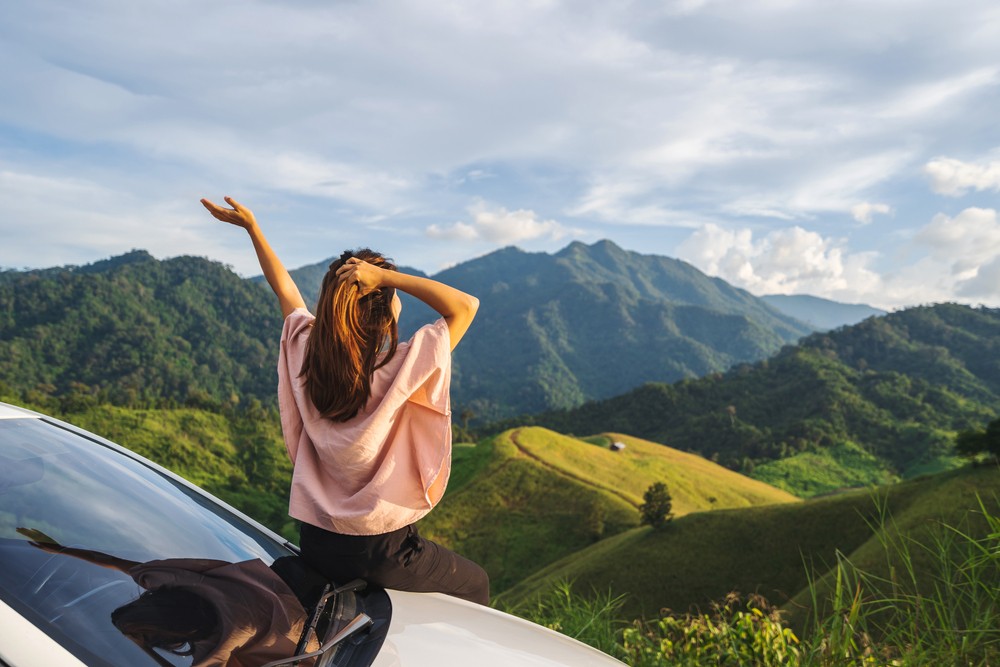
The trail to Seosar Lake inside GHNP starts from nearby Rolla village and rewards early starters with solitude and Himalayan wildlife (Himalayan tahr, monal pheasant) that you simply won’t see in the more-visited spots. Stays run ₹1,200–2,500 per night including meals. Mobile connectivity is patchy beyond Gushaini — which, depending on your relationship with your phone, is either a problem or the entire point.
Tirthan is the kind of place that people who go there become oddly proprietary about. There’s a reason for that.
The Practicalities of the Trips
By Train. The two most useful departures are the Dehradun Shatabdi (12017) from New Delhi at 6:50 AM, reaching Dehradun by 11:55 AM (gateway to Mussoorie, Rishikesh, Lansdowne, Chopta), and the Ranikhet Express (15013) from Delhi at 10:40 PM, reaching Kathgodam by 5:20 AM (gateway to Nainital). For Kasauli, the Kalka Shatabdi (12005) departs at 7:40 AM and reaches Kalka by 11:40 AM. Book on IRCTC at least a week in advance for late April weekends — these trains fill up.
By Road. Expect to pay ₹3,500–5,500 for a Dzire or Ertiga round-trip on self-drive from most major rental services, excluding fuel. Fuel for a 500-kilometre round trip in a petrol hatchback runs approximately ₹2,500–3,000 at current prices. If driving, take NH58 for Rishikesh, Mussoorie, and Lansdowne — leave Delhi before 5:30 AM or after 9 PM Friday to avoid Ghaziabad and Hapur traffic. For Nainital, NH9 through Moradabad is cleaner early morning; the Dasna interchange can be a bottleneck on weekend mornings after 7 AM.
What to Pack for an April Hill Trip. Delhi in late April fools you — you step out in a t-shirt, drive six hours, and land in Kasauli at 1,800 metres where it’s 13°C and breezy. Pack one light down jacket or a fleece, one pair of track pants or warm leggings, and a light rain layer (pre-monsoon showers are not uncommon in Uttarakhand hills in late April). Good walking shoes matter more than sandals. Sunscreen is essential — at elevation, UV intensity increases significantly even when the air feels cool. A reusable water bottle, a power bank, and some cash (ATMs in smaller hill towns are unreliable) round out the essentials.
The Verdict: Where We’d Go This Weekend
If we’re being honest about the single best choice for this specific weekend, late April 2025, it’s Kasauli. Here’s why: the temperature is reliably cool (not “might be pleasant” but genuinely jacket-weather cool), the crowd is thin relative to Mussoorie and Nainital, the Kalka Shatabdi makes the logistics clean and relaxed, and Kasauli has the rare quality of being a place where doing nothing is the activity. No long trekking itinerary to manage, no rafting to book, no cable car queue — just old trees, cool air, and a town that moves slowly. For a weekend whose primary purpose is to stop melting, that is exactly the right prescription.
Go. The AC can wait until Monday.