



You stepped outside this morning and your phone felt like a panini press in your hand. Welcome to Delhi in April 2026, where the city is basically a tandoor and we are all the naan.
Let’s not ease into this. Step outside between noon and 4 p.m. right now in Delhi and you will understand, at a cellular level, why the Mughals built their summer palaces in the hills and their everyday palaces facing the river. The air has texture. The pavement is making decisions. A crow sat on a car bonnet in Lajpat Nagar on Thursday afternoon and then immediately reconsidered. This is life in Delhi this April, and it is genuinely historic — and not in a brag-about-it way.
Delhi’s Safdarjung base weather station logged 38.2°C earlier this week, roughly two degrees above normal for this time of year — with the Ridge station touching 39.5°C and Palam at 37.6°C. Those are not the dramatic numbers that make news anchors reach for superlatives, but the pace at which the city arrived at them is what’s rattling meteorologists. Delhi was sitting at a relatively gentle 30.8°C as recently as April 9. By April 11, it was 34.7°C. By mid-April, 38.2°C. That is a jump of nearly eight degrees in under two weeks. Your body doesn’t adjust to that. Your AC certainly doesn’t.
Meteorologists are attributing the sustained heat to a “heat dome” effect — dry northwesterly winds with no significant western disturbance forecast for the next several days, trapping warm air over the city and keeping temperatures elevated. Punjab, Haryana, and Chandigarh officially join the heatwave zone starting today, April 21, through April 23, with mercury expected to climb a further 2 to 4°C across Northwest India this week. Nights, which used to be Delhi’s saving grace, are offering less and less relief.
For context: last year’s April peak was 42.1°C, recorded on April 26. The all-time April record is 45.6°C, set in 1941 — a year in which air conditioning existed for approximately twelve people in the country and the rest of us just suffered with a wet towel and generational stoicism. We are not there yet. But the trajectory of this April is doing something unusual, which is arriving at its worst in the third week rather than building to it at the end of the month.
So. Given all of the above: how is Delhi actually surviving it? Badly, creatively, and with a remarkable amount of cold coffee.
The Businesses That Are Having the Best April of Their Lives
There is a cold coffee cart near Khan Market that has had a queue at 8 a.m. every morning for the past week. Not 8 a.m. brunch-crowd energy. Actual people who left their houses early specifically to get there before the heat became a medical concern, holding their oat milk cold brew like it is a sacred object. The man who runs it told a customer last Tuesday that he’s sold more in the past ten days than he did across the entire month of March.
He is not alone. Delhi’s cold beverage economy is experiencing something close to a gold rush. The Kashmiri sharbat wallahs who set up in Chandni Chowk every summer are reporting they pushed their arrival forward by two weeks this year. The nimbu pani uncle near Connaught Place‘s inner circle — the one with the cart that has been in the same spot since 2003 — says he’s going through three times the lemons he normally would at this point in April.
Jaljeera, aam panna, coconut water from the cart near Lodhi Garden with the umbrella that’s been repaired with a broom handle: all of them are thriving with a ferocity that suggests Delhi has a talent for converting misery into a cottage economy.
Less charming but equally booming is the AC servicing industry, which has essentially gone feral. If you called an AC technician this week for the first time this season, you were probably told two things: there is a waiting period of ten days to two weeks, and the gas refill costs slightly more than you remember from last year. Demand for portable desert coolers from neighbourhood hardware stores has shot up, and the ones that typically cost around ₹4,500 to ₹6,000 are moving faster than the shopkeepers can restock them. One store owner in Karol Bagh said, not entirely without satisfaction, that he’d sold his entire stock of Bajaj coolers on a single Saturday.
Rooftop bars are also doing numbers that their owners will probably cite in pitch decks for the next three years. Bookings at rooftop venues across South Delhi — Hauz Khas, Vasant Vihar, Defence Colony — are reportedly running at double the volume compared to the same week last April, which is counterintuitive until you think about it for two seconds. When it’s 38°C at street level, the rooftop still feels like a gesture toward sky and breeze. Also, sundowners now begin at 6 p.m. in earnest because nobody is going outdoors at 7 p.m. anymore.
The City’s Infrastructure: A Diplomatic Assessment
The Delhi Metro, as always, is doing the Lord’s work. Ridership data from the DMRC suggests April weekday numbers are up compared to last year, which tracks — every additional degree outside pushes another ten people off bikes and autos and onto the AC coaches. The metro is crowded and occasionally smells like the entirety of Delhi’s professional ambition crammed into a Blue Line carriage, but it is cold, and that is the single most important thing anyone can say about a mode of transport this month.
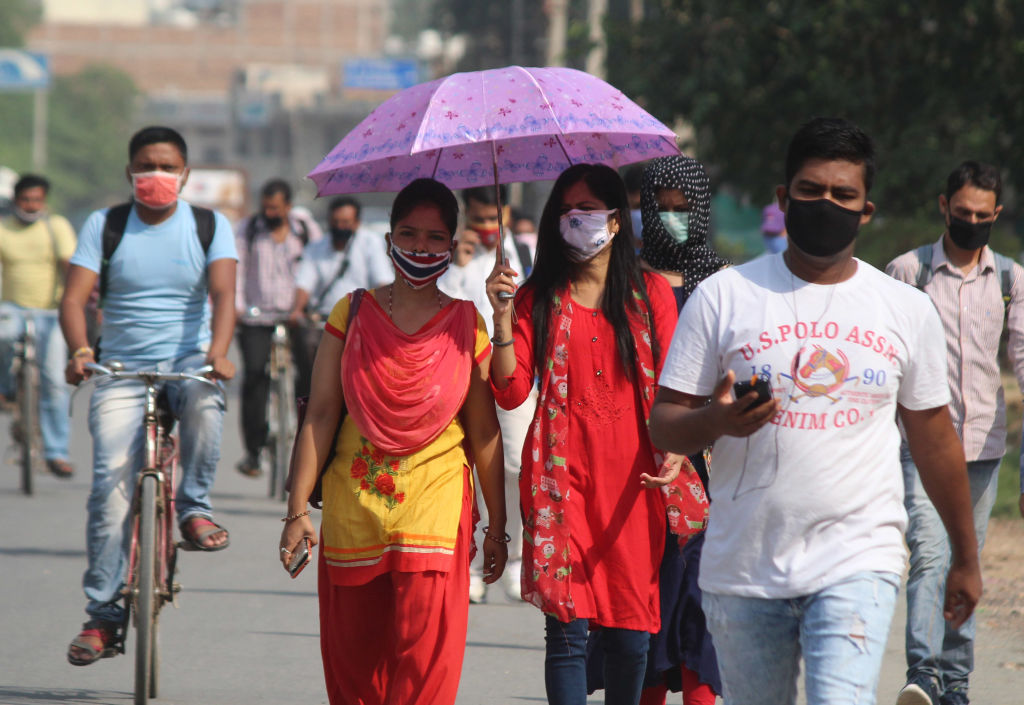
The roads are a different story. Auto rickshaws with no AC, delivery riders on bikes at 1 p.m., and construction workers who simply have no alternative to being outside in the middle of the day — the heat burden is not equally distributed, and the infrastructure for managing it is patchy at best. Delhi has a Heat Action Plan, which the government dusts off every April with the enthusiasm of someone reading out terms and conditions. Cooling centres are technically mandated. Whether the one near you is open, staffed, and stocked with water is a different conversation.
Power demand is surging. The Delhi government and discoms have been managing load requirements, but the familiar summer anxiety — the power cut that lands right when you’ve just gotten to sleep — is already appearing in neighbourhood WhatsApp groups with the regularity of a bad sitcom returning for another season. The good news is that Delhi’s power infrastructure has genuinely improved over the past decade. The less good news is that it’s being stress-tested by a month that arrived at peak-summer intensity three weeks ahead of schedule.
The Ways Delhi Is Coping That Nobody Warned You About
Summer meal culture in Delhi undergoes a complete personality shift in April that is not talked about enough. People stop eating hot food by choice. The dal makhani that defined your winter dinner parties has been quietly replaced by curd rice, fruit bowls at 11 p.m., and a genuinely surprising amount of chilled khichdi eaten directly from the fridge at 2 a.m. The lassi is no longer a treat — it is structural. The kulfi falooda has moved from weekend dessert to Tuesday-at-6-p.m. coping mechanism.
Sleep schedules are changing too. The classic Delhi social hour of 9 p.m. dinner is shifting — people are eating at 7:30 now, not because they’re more disciplined but because it’s still too hot to be productive at 8 p.m. and dinner is at least something to do. The late-night walk that Delhiites have always taken around 11 p.m. or midnight has become, for many, the only outdoor activity of the day. Lodhi Garden at 10:30 p.m. right now has more people than it does at 9 a.m., which tells you everything about how the city is adapting its rhythms.
The fashion shift is real and slightly chaotic. Cotton and linen have been vindicated completely — the people who evangelised breathable fabrics all winter are now being treated with the respect usually reserved for people who predicted something nobody believed. Meanwhile, the number of men in Delhi who have adopted the kurta-and-shorts combination as a form of thermal protest is statistically impossible to ignore. It is not always working aesthetically. It is absolutely working thermally.
The Delhi Micro-Neighbourhood Survival Tier List
This is the part you’re going to screenshot, so let’s be honest about it.
God Tier (somehow thriving): Lodi Colony and the Lodhi Garden area, where old bungalow-era Delhi with its actual trees and underground water tables means that 38°C genuinely feels different from 38°C anywhere else. The tree cover here is not a vibe — it is a measurable 3 to 4°C difference from the treeless concrete of newer colonies. Spend five minutes in Lodhi Garden at noon and then five minutes at any DLF Phase intersection and your body will file the data instantly.
Solid Tier (managing with dignity): Khan Market, Hauz Khas Village, Nizamuddin. These have enough green cover and narrow-lane shelter to make the heat feel survivable. Also Chanakyapuri, which was designed with wide roads and deep setbacks and trees that actually grew because someone planted them for reasons other than quarterly reporting.
Mid Tier (fine if you have AC and an Uber account): Most of South Delhi’s residential colonies — GK1, GK2, Vasant Vihar, Safdarjung Enclave. The houses are good, the trees exist, but you are not going anywhere on foot after 10 a.m. without reconsidering your life choices.
Suffering Tier (prayers up): Dwarka, Rohini, large parts of Faridabad and Gurugram where the built environment is overwhelmingly concrete, the roads are wide and shadowless, and the nearest green cover is a photograph of green cover on a billboard advertising a housing project. The urban heat island effect here is not a theory — it is something you feel in your sternum.
Wild Card: Chandni Chowk. Technically miserable on every measurable metric — narrow lanes, dense population, no tree cover, ambient heat from countless cooking stoves. And yet, the concentration of infrastructure for surviving heat — sharbat, kulfi, roof access through ancient havelis, the social intimacy of people who have been managing Indian summers collectively for four hundred years — makes it arguably more functional than somewhere that relies entirely on technology to solve a problem the city’s bones weren’t built for.
The Actual Survival Guide (Non-Negotiable Edition)
IMD is saying this explicitly: avoid outdoor activity between noon and 4 p.m., stay hydrated constantly — not when you feel thirsty, because at this temperature your thirst signal is running behind — and use your weather apps to plan your commute around the worst of the heat. This is sensible advice dressed in bureaucratic language. Translation: eat something salty in the morning (electrolytes matter), drink water before you feel like you need it, and accept that Delhi in the third week of April 2026 is not the city for optimising outdoor productivity.
The sun sets a little after 7 p.m. now. The city exhales. The cold coffee carts do their biggest business between 5 and 8 p.m. The rooftop bars fill up. The Lodhi Garden walkers emerge. The 11 p.m. lassi happens. And Delhi — impossible, infuriating, magnificent Delhi — performs its oldest trick: adapting to something that should not be survivable and surviving it with such flair that you forget, for a moment, how extreme it actually is.