


Here is the honest truth about global trade and war policy: it is almost always covered as if it is happening to somebody else. A finance minister somewhere, a CEO on a panel, an unnamed “sector.” This article is for you — the person in Delhi with an EMI or two, a wishlist on Amazon.in, and a vague sense that something expensive is happening in the world but no idea whether to care about it yet.
You should. Here is why, and here is exactly what it means for your wallet.
First, The Plot So Far — In Three Minutes
To understand where you are in April 2026, you need to understand the twelve months that got you here, because the story has had enough plot twists to qualify as a Netflix series.
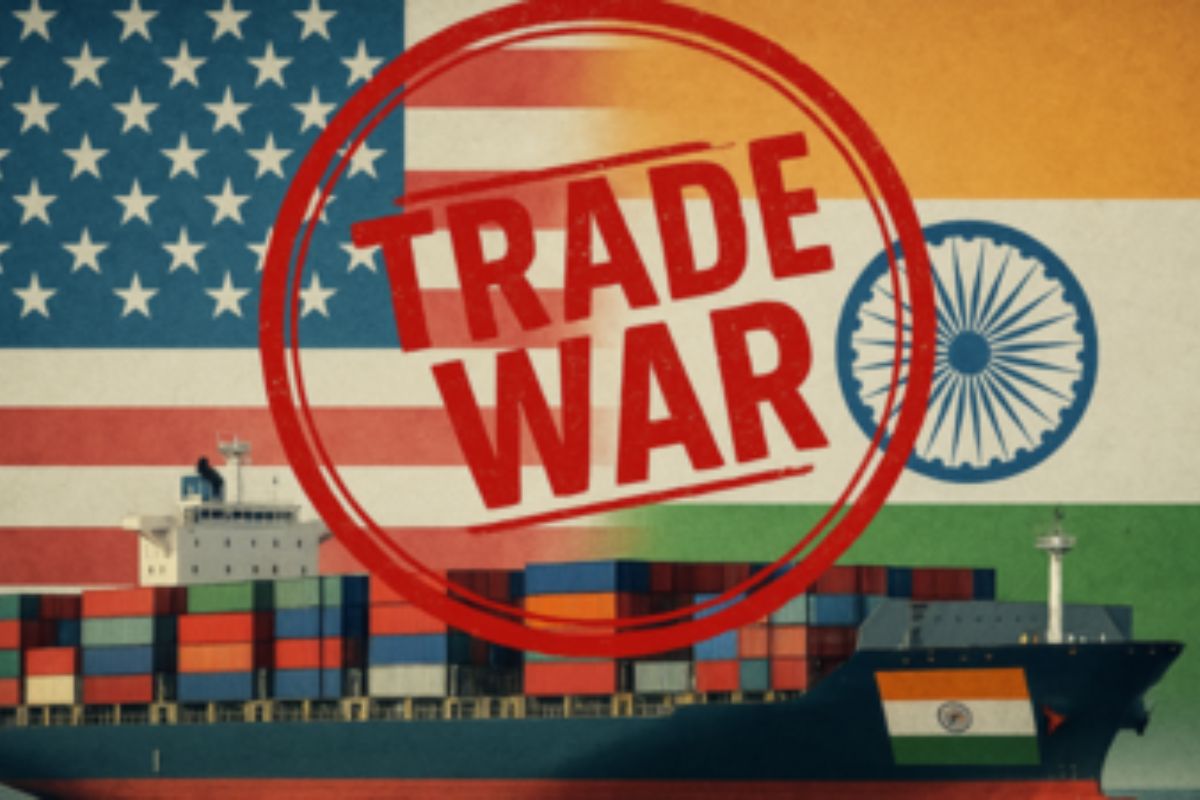
In April 2025, President Donald Trump announced his now-famous “reciprocal tariff” regime — a sweeping set of import taxes applied to goods coming into the United States from almost every country on earth. India was hit with an initial 26 percent tariff, which, though painful for Indian exporters, was actually on the lower end of what several Asian competitors faced. From January to April 2025, the overall average effective US tariff rate rose from 2.5 percent to an estimated 27 percent — the highest level in over a century.
Then the situation got more specifically Indian. Trump had long been irritated by India’s continued purchase of Russian crude oil — a habit India had developed after 2022 when discounted Russian supplies became available post-Ukraine invasion. On August 1, 2025, the US imposed an additional 25 percent punitive duty on India, linked directly to its Russian oil imports, bringing the total effective tariff on most Indian exports to the US to 50 percent. That was the highest rate the US applied to any major trading partner.
The new 50 percent rate applied to a range of goods including gems and jewellery, garments, footwear, furniture, and industrial chemicals — sectors that employ millions of Indians. The Global Trade Research Initiative projected that Indian exports to the US could fall from $86.5 billion to around $50 billion as a result.
That was the bad news. Then came February 2026.
On February 2, 2026, President Trump announced that the US and India had reached an agreement, rolling back tariffs on Indian imports from 50 percent to 18 percent. In exchange, India agreed to eliminate tariffs and non-tariff barriers on US goods, with the stated goal of bringing these barriers to zero, commit to stopping Russian oil purchases, and pledge to increase imports of US energy, technology, and agricultural products — with estimates suggesting purchases of over $500 billion over time.
That is the macro story. Now let’s get to why it matters to the person reading this on their phone in Hauz Khas.
Your iPhone Is Playing a Different Game Entirely
Let’s start with the thing everyone instinctively assumed would get more expensive: the iPhone. The reality here is genuinely counterintuitive and worth understanding properly.
Apple has been aggressively shifting its manufacturing out of China and into India over the past three years. A significant portion of iPhones sold globally — including in the US — are now assembled in Tamil Nadu, at Foxconn and Tata Electronics facilities. Which means that when the US imposed tariffs on Indian goods, there was widespread panic about whether the next iPhone upgrade was going to cost an arm and a leg.
Here is the actual answer: semiconductors and derivative products like iPhones were already exempt from the existing reciprocal tariffs on India. When the tariff was raised to 50 percent in August 2025, semiconductors continued to be exempt. Apple’s India manufacturing operation was, in the formal language of trade policy, not directly in the line of fire.
However — and this is the nuance that matters — the exemption comes with a catch that is still playing out. Trump has floated the idea of a 100 percent tariff on semiconductors and chips, and has indicated that companies building in the US would be exempt from tariffs on the final product, while others might not be. The US Section 232 investigation into semiconductors and embedded products like mobiles and laptops is expected to be placed before the President soon, and its outcome is genuinely uncertain.
What this means for you in Delhi is: your next iPhone upgrade is not dramatically more expensive right now because of tariffs directly. But there is a sword hanging. If the semiconductor tariff is eventually applied to India-manufactured devices, the arithmetic changes fast — a 100 percent duty on semiconductors would effectively translate to roughly a 40 percent duty on a smartphone, since 35 to 40 percent of a smartphone’s cost of production comes from semiconductors. A phone that currently retails for ₹1,30,000 could climb toward ₹1,80,000 if that scenario materialises. Watch this space carefully.
Your American Whisky Is About to Get Cheaper. Genuinely.
This is the more immediately good news for a specific kind of Delhi consumer. As part of the February 2026 deal, India committed to reducing or eliminating tariffs on a wide range of American goods. Prices of US industrial goods, tree nuts, fresh and processed fruits, soybean oil, wine, and spirits are expected to fall as India moves toward lowering import duties.
What this means in real terms: that bottle of Jack Daniel’s Old No. 7 that currently costs somewhere around ₹4,000 to ₹5,000 in a Delhi wine shop — depending on which state you’re buying it in and the local excise structure — could come down meaningfully once the tariff reduction on American spirits filters through the supply chain. Jim Beam, Maker’s Mark, American craft whiskeys that you currently see only in the expensive sections of premium liquor stores: all of these become more competitive against Scotch, which currently enjoys relatively lower tariffs.
California almonds and pistachios, which India currently taxes heavily as a form of protecting domestic dryfruit trade, are also set to become cheaper. If you are the person who grimaces every time you buy a 500-gram pack of almonds at the supermarket and do the mental math on whether this is genuinely affordable, this is good news arriving at your kitchen — probably by the second half of 2026 as deals are finalised.
The Fuel Bill Everyone Is Ignoring
Here is the part of the deal that is getting the least coverage in lifestyle media but will have the most pervasive effect on your daily life in Delhi. India agreed, as a core part of this trade deal, to stop buying Russian crude oil.
India has been importing roughly 1.5 million barrels of Russian oil per day, which makes up more than a third of India’s overall oil imports. Russian oil was discounted — significantly cheaper than market rates — because Western sanctions had reduced Russia’s pool of buyers. India took advantage of this discount aggressively from 2022 onwards, and the savings were substantial at a national level.

Now India has committed to replacing that Russian oil with American and other allied-country supplies. American crude is not discounted. Market-rate oil from the US, the Middle East, or other sources is more expensive than the deal India was getting with Russia.
The direct consequence for you: petrol and diesel prices in India are partially linked to the global crude price India is actually paying. If India’s average crude import cost rises — which it will if the shift away from Russian oil is implemented as promised — the pressure on domestic fuel prices rises with it. And petrol prices in Delhi ripple through everything: your Ola and Uber fares, the cost of goods transported by truck, the inflation number that determines what the RBI does with interest rates. Which, eventually, determines what your EMI is.
This is not a hypothetical chain of events. This is how every fuel price shock in the past twenty years has transmitted through the Indian economy, and this one is structural rather than cyclical. The government will try to manage it through subsidies and excise adjustments, as it always does, but the underlying cost pressure is real.
Your IT Job, Your Freelance Client, and the Sector That Took the First Hit
If you work in IT services, consulting, or anything that involves being billed in dollars to an American client, you have already been living the trade war’s effects, even if nobody called it that.
The NIFTY IT index declined by nearly 15 percent this year as markets priced in the uncertainty around the tariff regime. This is not just an investor problem — when the market signals that IT sector earnings are under pressure, companies slow hiring, freeze increments, and become more cautious about headcount. The belt-tightening in India’s major IT employers — which disproportionately affects Delhi’s Gurugram-based tech community — is directly traceable to this uncertainty.
The February 2026 deal has helped stabilise this. The US-India technology cooperation provisions, which include expanded bilateral trade in technology products and joint technology cooperation, are a genuine positive for the sector. But the 15 percent loss in the index has not been fully recovered, and the sector’s caution is still visible in hiring behaviour.
For the freelancer in Delhi billing American clients: the rupee’s relationship with the dollar during periods of trade tension has been volatile. A weaker rupee makes your dollar earnings worth more in hand — which sounds like good news, until you price what you spend that money on. Imported consumer goods, electronics, and fuel all get more expensive when the rupee weakens. The 2025 period saw the rupee under sustained pressure, and anyone who was earning in dollars while spending in rupees lived through both the benefit and the inflation that partially erased it.
The Brands You Wear and The Chains That Supply Them
Nike, Adidas, and the other global sportswear brands that dominate Delhi’s premium gym-shoe market mostly manufacture in Vietnam, Indonesia, and China — not primarily in India. This means the India-US tariff story doesn’t directly affect their production costs in a simple way. But the broader tariff war does.
Vietnam faced a 46 percent US tariff in the original reciprocal regime. Indonesia faced similar pressures. Both countries were part of the 90-day tariff pause that Trump announced in mid-2025, during which negotiations were underway. The items most affected by the broad tariff regime include electrical equipment, vehicles, and computers, alongside metals — the core inputs for global manufacturing supply chains.
When every major manufacturing hub in Asia is dealing with tariff uncertainty simultaneously, the brands that source from them build a buffer into their pricing. That buffer tends to appear in retail prices. The ₹12,000 pair of running shoes you were looking at in Select Citywalk is not priced purely on the cost of manufacturing; it is priced to account for supply chain risk, currency exposure, and the brand’s margin protection in a volatile environment. All of those inputs got more expensive in 2025, and while the February 2026 deal has reduced tension, the recalibration of global supply chains — brands moving sourcing, building inventory buffers, renegotiating contracts — takes time to translate into price stability at retail.
The Desi Alternative Moment
There is one genuinely exciting part of this story, and it is the domestic brands that have been quietly becoming formidable competitors in the space that imported brands used to own.
boAt, which manufactures earphones and audio products in India, has benefited from the government’s PLI (Production Linked Incentive) scheme and the broader preference for Indian manufacturing during a period when importing anything felt economically complicated. Campus, the Hisar-based footwear brand, has expanded aggressively and now sits in the middle segment where budget-to-mid-tier Nike and Adidas alternatives live. Noise, Noise Colorfit, and other wearables brands have taken significant market share from imported smartwatches in the ₹2,000 to ₹5,000 segment. These are not consolation prizes — they are genuinely good products that a generation of Indian consumers reached for partly because the global alternatives became more expensive to import and partly because the product quality has genuinely closed the gap.
The trade war, in an unintended way, created a stress test for India’s domestic consumer electronics and lifestyle brand ecosystem. Many of them passed.
The Bottom Line for Your Wallet Right Now
Here is the practical summary. In April 2026, the worst of the India-US trade tension has formally eased following the February deal, but the consequences are still working through the system. On the goods that become cheaper — American spirits, nuts, some industrial inputs — you will see price changes over the next two quarters as importers and retailers adjust.
On fuel, the transition away from Russian oil is a real cost that will show up gradually and persistently. On technology — especially smartphones — the situation is genuinely uncertain and worth watching, because a semiconductor tariff decision could reprice the category significantly. On your EMI, the link runs through fuel costs, inflation, and RBI rate decisions, none of which are moving in the direction of cheaper borrowing right now.
The trade war was never going to be a story that happened elsewhere. It was always going to be the story of why your grocery bill moved, why your Uber fare adjusted, and why the phone upgrade you planned for June is going to require one more scroll through the options before you commit.
Read the fine print before you swipe.